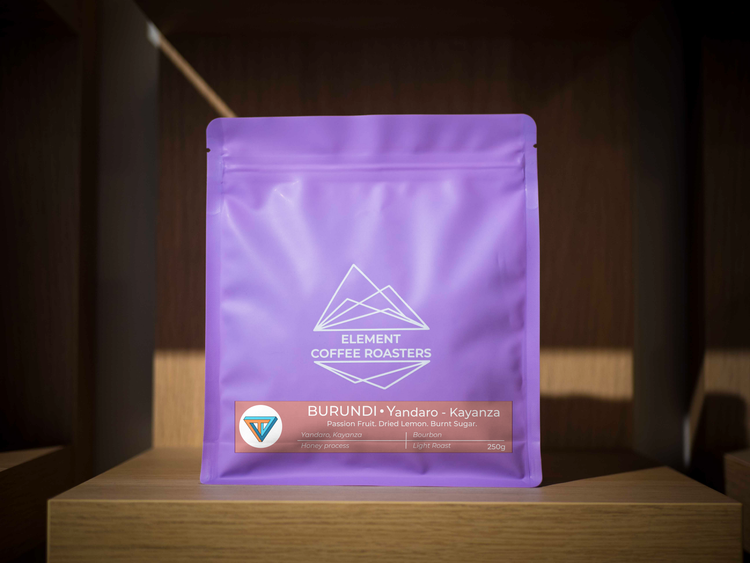
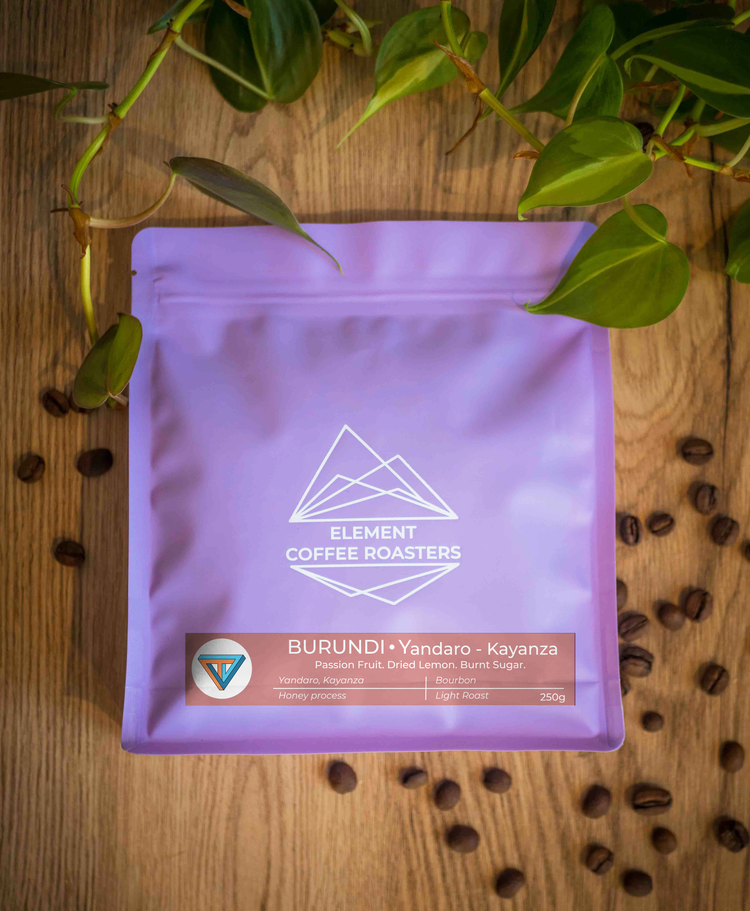
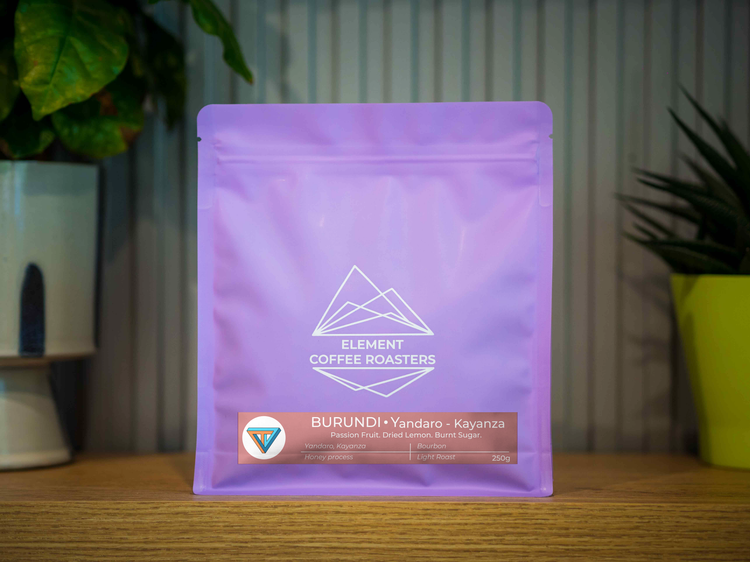
Burundi Yandaro - Kayanza
PASSION FRUIT. DRIED LEMON. BURN SUGAR.
ROAST: Light
- Regular price
- €13,00
- Sale price
- €13,00
- Regular price
Basic Information
Basic Information
Grind of the coffee
Your coffee can be grounded according to your needs - from coffee beans, to espresso grinds, to filter grinds. Please specify how your coffee would be prepared and we will grind it for you.
Grind of the coffee
Your coffee can be grounded according to your needs - from coffee beans, to espresso grinds, to filter grinds. Please specify how your coffee would be prepared and we will grind it for you.
Couldn't load pickup availability


More about Burundi Yandaro - Kayanza
Description
More
Less
Yandaro Washing Station is a centralized coffee processing station situated in the Kayanza province in Burundi, which was established in 1986 and services around 3193 small farmers. The farmers here have roughly 360 trees on less than half a hectare of land, on average, and in addition to growing coffee, they also grow crops like bananas and beans. Ripe cherries are pulped, then immediately placed on raised beds for drying. Regular turning intervals create a honey most similar to the classic Costa Rican honey process. Subtle red fruits and noticeably elevated levels of sweetness in the cup are the most common characteristics of these high-class coffee beans.
Due to the small size and yield on the average coffee farm or plot, washing stations are the primary point of processing and purchase in Burundi. Unlike other coffee-growing regions in Central and South America where landholdings are slightly larger and coffee-centric resources are more available, most producers in Burundi do not have space on their property or the financial means to do their wet or dry-milling. Instead, the majority of growers deliver cherry to a facility that does sorting, blending, and post-harvest processing of day lots to create different offerings.
Country and Region Bourbon
More
Less
Process: Honey
More
Less
Variety: Bourbon
More
Less
Description
Yandaro Washing Station is a centralized coffee processing station situated in the Kayanza province in Burundi, which was established in 1986 and services around 3193 small farmers. The farmers here have roughly 360 trees on less than half a hectare of land, on average, and in addition to growing coffee, they also grow crops like bananas and beans. Ripe cherries are pulped, then immediately placed on raised beds for drying. Regular turning intervals create a honey most similar to the classic Costa Rican honey process. Subtle red fruits and noticeably elevated levels of sweetness in the cup are the most common characteristics of these high-class coffee beans.
Due to the small size and yield on the average coffee farm or plot, washing stations are the primary point of processing and purchase in Burundi. Unlike other coffee-growing regions in Central and South America where landholdings are slightly larger and coffee-centric resources are more available, most producers in Burundi do not have space on their property or the financial means to do their wet or dry-milling. Instead, the majority of growers deliver cherry to a facility that does sorting, blending, and post-harvest processing of day lots to create different offerings.
Country and Region Bourbon
Process: Honey
Variety: Bourbon
You May Also Like
More about us on social media